i built my own editorial operating system
i was a software engineer. then i became a creator. in 2026, working with AI coding agents, the two finally met: one person built the data platform, the intelligence layer and the publishing automation that run a 250k-follower creator business — no team, no SaaS, on a $12/month server.
the numbers it runs on
live figures, straight from the system this page describes. last update: 25 oct 2026.
the story, in three acts
the software engineer
i spent my first career in tech as a software engineer, and more than 15 years of my life in london. building systems for other people's businesses taught me how data becomes decisions — and how much of any operation is just well-organised plumbing.
the creator
i left that career to talk about what i actually care about: human behaviour, relationships, fatherhood, race — in portuguese, as an equal. the work grew into a community of 250k+ people and tens of thousands of real conversations in the comments. and with it came the creator's classic problem: five networks, scattered metrics, zero infrastructure — and no team.
the editorial os
AI coding agents collapsed the distance between having an idea and having a system. working in plain language with claude code, i designed and shipped my own platform in weeks: pipelines, dashboards, an intelligence layer over my audience's comments, and a blog that publishes itself. the engineer i was, the creator i am — with AI in the middle.
what it does
every network, one panel
hourly ETL from instagram, tiktok, youtube, facebook and threads via official APIs, plus site traffic from server logs and google search console. a single "panorama" shows community, reach, search and AI-presence in one place — with a morning report and a live TV wall.
comment intelligence
74k audience comments ingested and classified — by deterministic rules, no black box — into themes, emotions, questions, pains and product signals, then crossed with performance data to decide what to make next.
data-driven editorial
an editorial planner that crosses what the audience searches for (keyword research) with what actually performed, generating scored content briefs — so the next video starts from evidence, not guesswork.
a blog that ships itself
every video becomes a long-form article: drafted into headless wordpress, staged as a trello card, cover attached, published automatically and deployed as a static site — with entity-level SEO and a daily monitor measuring whether AI assistants cite the site.
under the hood
the stack
what it looks like
real panels, real data.
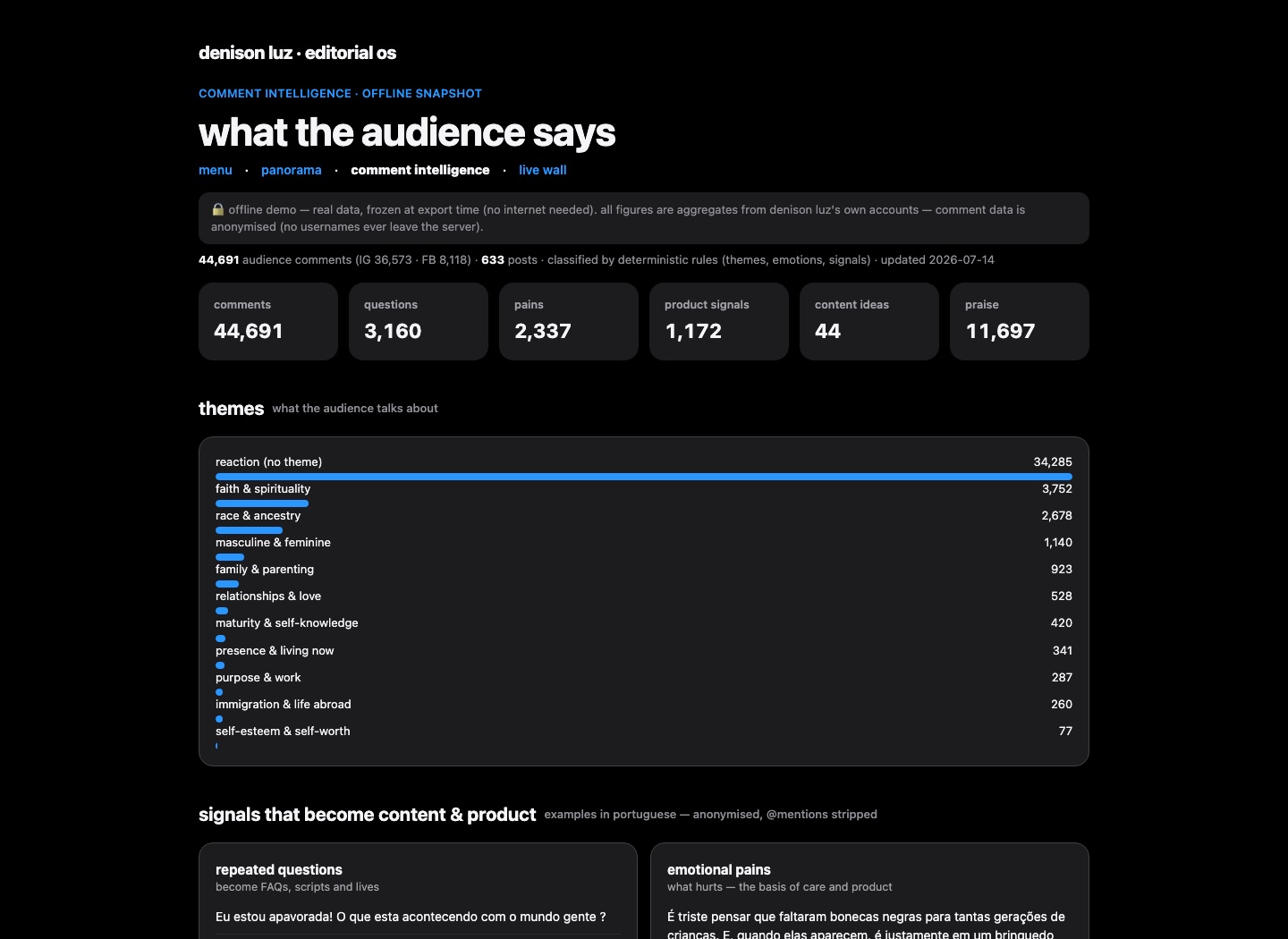
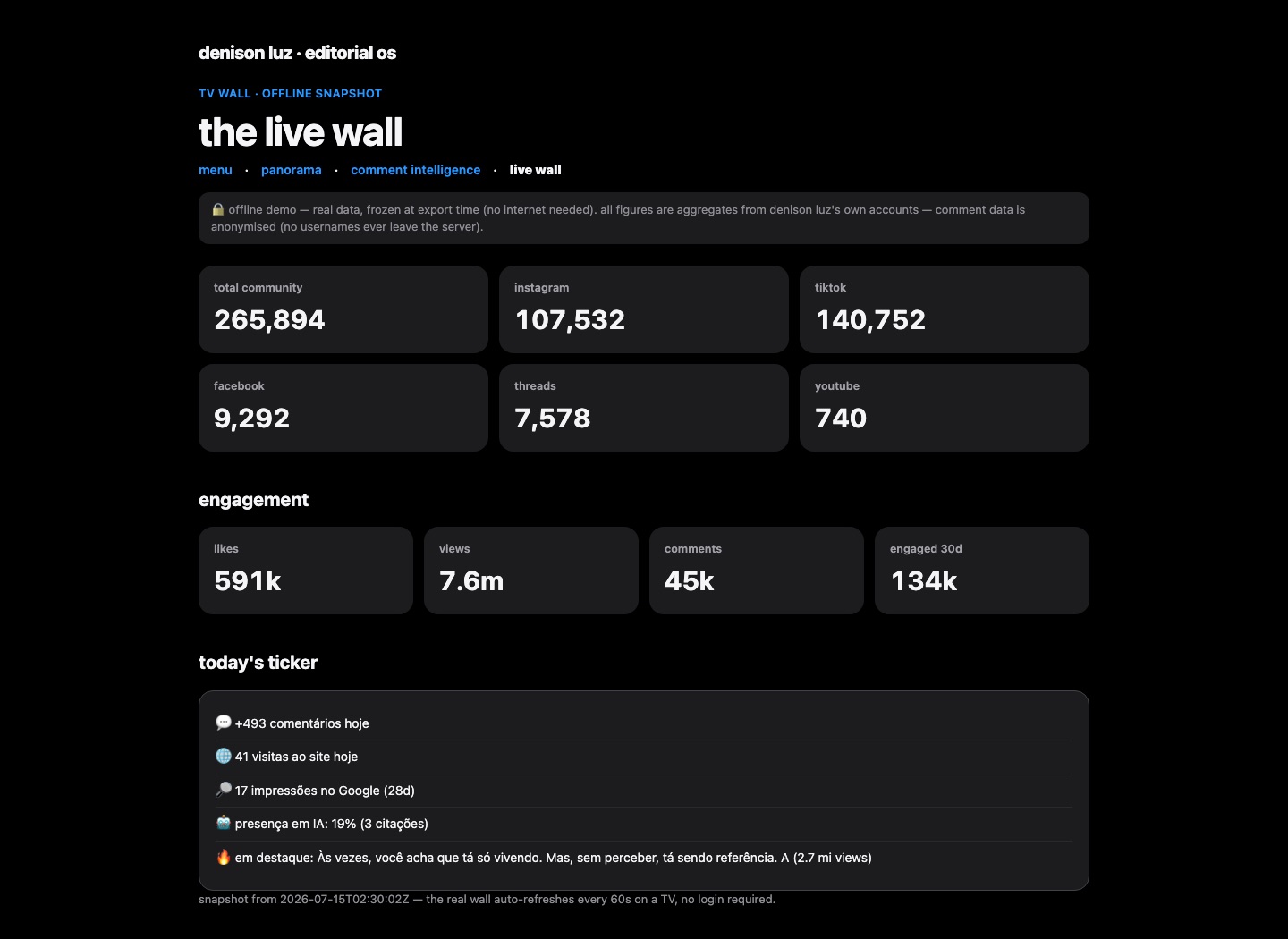
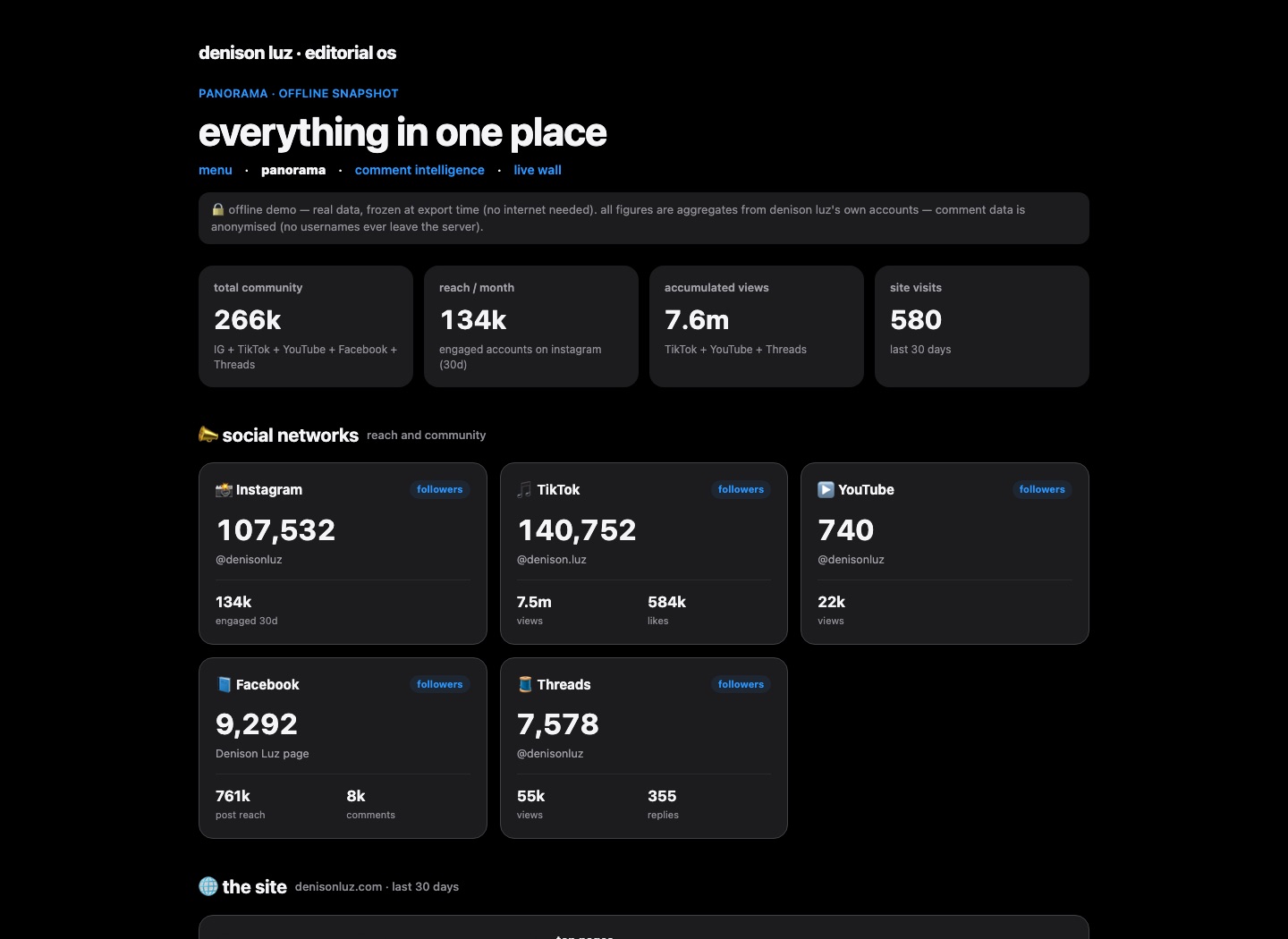
the point isn't the dashboard.
it's that one person, with AI agents and clear constraints, can now build the internal tooling that used to take a team. if you want to talk about this case — a talk, a workshop, a conversation — write me.
contact@denisonluz.com